
Web development is changing fast. Many businesses in Bangladesh want to grow online, but often feel confused about which programming language to choose for their website or app. The wrong choice can mean wasted time, higher costs, and slow websites.
But the right choice can help your business reach more customers—both in Bangladesh and in the international market.
In this article, you will learn about the top programming languages for web development. You’ll see which languages work best for different business needs, get practical tips, and find real-world examples. We will also explain why working with a trusted company like One Stop IT Solutions can make your web project more successful, affordable, and future-ready.
—
Why Does The Right Programming Language Matter For Your Business?
Many business owners think, “Any website is fine, as long as it looks good.” But that’s not true. The programming language behind your website affects:
- Speed: A slow website turns customers away.
- Security: Weak code can lead to hacking and data loss.
- Scalability: As your business grows, your website should grow too.
- SEO: Good code helps your website rank higher on Google.
Choosing the right language is an investment in your business’s future.
Let’s understand each factor more deeply:
Speed:
Your website’s programming language and framework influence how fast pages load and respond. For example, languages like Go and C# are well-known for high speed and performance. If you run an e-commerce store, even a 2-second delay can cost you sales.
Google’s research shows that users leave slow sites quickly. Fast sites also use fewer server resources, which means lower hosting costs.
Security:
Each language has its strengths and weaknesses in security. For example, Java and C# are strict about security, making them great for banks and businesses that handle sensitive data. On the other hand, poorly written PHP can be easy for hackers to attack—but with good practices, PHP is safe.
Security is not just about the language, but also how skilled your developers are. However, some languages have built-in features to protect against common attacks, like SQL injection or cross-site scripting.
Scalability:
A scalable website can handle more visitors, more data, and more features as your business grows. Choosing a language that supports scalability is important if you hope to expand. For example, Java, Go, and Python are often used by big companies because they scale well.
If you pick a language that doesn’t scale, you may need to rebuild your site later—costing you time and money.
SEO:
Search engines like Google rank sites based on speed, code quality, and structure. Some languages, like PHP (with WordPress) and JavaScript (with frameworks like Next. js), make it easy to create SEO-friendly sites. Others may require extra work. Clean code, proper use of headers, and fast performance all help SEO.
Maintenance and Future Upgrades:
The right language also makes it easier to fix bugs, add features, or redesign your site in the future. If you choose a rare language, you may struggle to find developers later.
Cost:
Some languages need more expensive hosting or skilled (and costly) developers. For example, Java and C# often cost more than PHP or JavaScript. But sometimes, a higher upfront cost means less maintenance and lower costs long-term.
Local and Global Talent:
If you want to hire locally, choose a language popular in Bangladesh. If you plan to work with global teams, pick languages used worldwide.
Integration with Other Systems:
If your business uses special software (like accounting, ERP, or CRM), make sure the language you choose can “talk” to those systems easily.
A Non-Obvious Insight:
Many beginners focus only on how easy or cheap it is to build the first version of a website. But the biggest costs happen later—when you add new features, grow traffic, or fix problems. The language you choose now affects your costs and headaches for years.
Another Non-Obvious Insight:
Some languages have better “ecosystems”—meaning, lots of ready-made tools, plugins, and libraries. This can save you thousands of dollars and months of work. For example, using PHP with WordPress or JavaScript with React can give you a head start, thanks to huge communities and support.
—
The Top Programming Languages For Web Development
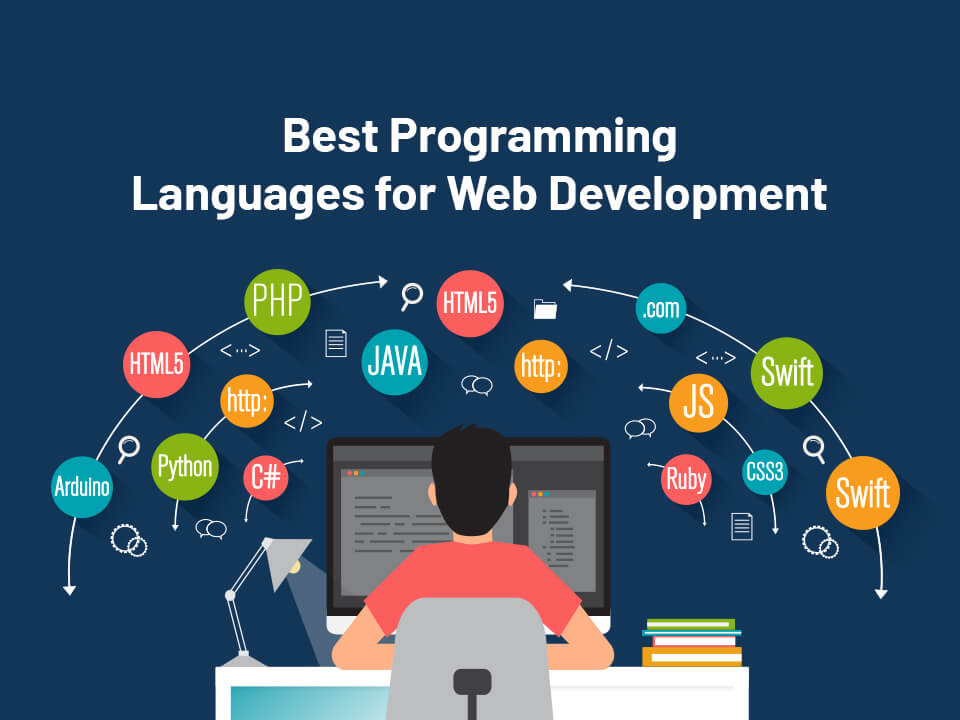
Let’s look at the most popular and useful programming languages for web projects. Each language has its own strengths, so we will explain where each one works best.
1. Javascript
JavaScript is the most popular language for web development worldwide. It runs in all web browsers—Chrome, Firefox, Safari, and more.
Why choose JavaScript?
- Makes websites interactive (sliders, pop-ups, menus)
- Works on almost every website
- Huge community support and resources
Example: Facebook, YouTube, and most big websites use JavaScript.
In Bangladesh: Many e-commerce sites, news portals, and startups use JavaScript for dynamic user experiences.
Tip: If you want a modern, interactive website, JavaScript is a must.
More Detail:
JavaScript started as a simple scripting language to add effects to web pages. Today, it’s much more powerful, thanks to new tools called “frameworks” and “libraries. ” Popular frameworks like React, Angular, and Vue. js let developers create complex, fast websites that look and feel like mobile apps.
For example, online shops can use JavaScript to update prices instantly, show live stock, or create smart forms.
How JavaScript Works:
JavaScript runs directly in your user’s browser, so changes happen instantly. This makes websites feel fast. It also means your website can work offline or send real-time updates (like chat or notifications) without reloading the page.
Server-Side JavaScript:
With Node. js, JavaScript also runs on the server. This means you can build your whole website—front and back end—with one language. This is called “full-stack JavaScript” and is popular for startups and tech companies who want to move fast.
Non-Obvious Insight:
JavaScript is not just for websites. It’s used in mobile app development (React Native), desktop apps (Electron), and even IoT (Internet of Things). If you invest in JavaScript, your team can build many types of digital products.
Downsides:
JavaScript is powerful but can be tricky for beginners. Poorly written JavaScript can make websites slow or buggy. That’s why many companies use “TypeScript” (see below) to catch mistakes early.
—
2. Python
Python is known for its simple code and powerful features.
Why choose Python?
- Great for building complex web apps (like e-commerce, booking systems)
- Excellent for data analysis, AI, and automation
- Fast development means lower costs
Example: Instagram, Pinterest, and Spotify use Python.
In Bangladesh: Tech startups and digital agencies use Python for apps that need smart features (like search, recommendations, or analytics).
Tip: Python is perfect if your business plans to add AI or analytics in the future.
More Detail:
Python is famous for its “readability”—code that looks like plain English. This means it’s easy to learn and fast to write. Python’s main web framework, Django, is used by many top sites. Django comes with many features built-in: user accounts, security, admin panel, database connections. This saves time and money.
AI and Data:
If you want to add features like chatbots, recommendations (“You might also like…”), or data analytics, Python is the best choice. It connects easily with AI tools like TensorFlow and machine learning libraries like scikit-learn.
Automation:
Python is great for automating repetitive tasks, like sending emails, updating prices, or generating reports. This can save your team hours every week.
Non-Obvious Insight:
Many businesses start with a simple website, then need complex features later. If you think you’ll need advanced features—like custom dashboards, analytics, or automation—starting with Python makes upgrades easier.
Downsides:
Python is not the fastest language for pure “front-end” (what users see). Most sites use Python on the server (“back end”) and JavaScript for the front.
—
3. Php
PHP is a classic language, powering over 70% of websites globally.
Why choose PHP?
- Perfect for content management systems like WordPress
- Affordable hosting and development
- Easy to find skilled developers in Bangladesh
Example: Facebook started with PHP. WordPress, which powers millions of websites, uses PHP.
In Bangladesh: News sites, corporate portals, and small businesses often use PHP for quick, reliable websites.
Tip: For budget-friendly websites or blogs, PHP is a solid choice.
More Detail:
PHP works well for websites that need to show lots of articles, photos, or products. It’s the backbone of WordPress, which powers over 40% of all websites. Using PHP means you get access to thousands of ready-made themes and plugins.
This can save months of development.
Where PHP Shines:
If you need a blog, company site, or online shop, PHP is fast and reliable. It’s also great for projects where you need to update content often.
Developer Availability:
PHP developers are easy to find in Bangladesh, and hosting is cheap. This makes PHP ideal for small and medium businesses with limited budgets.
Non-Obvious Insight:
Many think PHP is “old-fashioned. ” But modern PHP (with frameworks like Laravel) is secure, fast, and used by big companies. Don’t dismiss it just because it’s been around a long time.
Downsides:
PHP can get messy if not coded well. Always hire experienced developers, or use well-known frameworks and content management systems.
—
4. Java
Java is a very stable language, ideal for large, secure web applications.
Why choose Java?
- Great for banking, e-commerce, and enterprise systems
- Runs on any device (cross-platform)
- Strong security
Example: LinkedIn, Amazon, and banking apps use Java.
In Bangladesh: Banks, telecoms, and large companies trust Java for mission-critical systems.
Tip: Choose Java if your business needs top-level security and reliability.
More Detail:
Java is known as a “write once, run anywhere” language. This means your website or app can run on any device—Windows, Mac, Linux, even mobile. Java is trusted for projects where failure is not an option: banking, insurance, healthcare, and government.
Security:
Java has strong built-in security. It checks for errors and blocks many common attacks. For example, banks in Bangladesh use Java for their online banking systems, because it’s tested and reliable.
Scalability:
Java handles millions of users at once. If you plan to grow big, Java is a smart choice.
Non-Obvious Insight:
Java is also used for “middleware”—software that connects your website to other business tools (like payment gateways, inventory, or CRM). If you have complex needs, Java is often the best option.
Downsides:
Java development can be expensive and slower than simpler languages. It’s best for large businesses or high-security projects.
—
5. Ruby
Ruby (with the Ruby on Rails framework) helps you build web apps fast.
Why choose Ruby?
- Rapid development saves time and money
- Flexible for startups and new ideas
- Clean, readable code
Example: Airbnb, Shopify, and GitHub use Ruby.
In Bangladesh: Some tech startups use Ruby for MVPs (minimum viable products) and quick launches.
Tip: Ruby is best for startups or businesses wanting to test ideas quickly.
More Detail:
Ruby on Rails is famous for “convention over configuration. ” This means you can build powerful web apps with less code. Startups love Ruby because it helps them go from idea to launch in weeks, not months.
Flexibility:
If you need to change features often, or pivot your business model, Ruby is a great choice. You can add or remove features quickly.
Community:
Ruby has a global community and lots of open-source code. This means you can find ready-made solutions for common problems.
Non-Obvious Insight:
Ruby is also very readable. This means new developers can understand and update your code, even if your original team changes.
Downsides:
Ruby is not as fast as Go or Java. For very high-traffic sites, you may need extra servers.
—
6. Typescript
TypeScript is a modern version of JavaScript with extra safety features.
Why choose TypeScript?
- Catches errors before websites go live
- Makes code easier to manage for big projects
- Works with all JavaScript libraries
Example: Google’s Angular framework uses TypeScript.
In Bangladesh: Teams building large apps (like e-commerce or SaaS platforms) prefer TypeScript for cleaner code.
Tip: If your website will grow bigger over time, TypeScript can save many headaches.
More Detail:
TypeScript adds “types” to JavaScript. This means the computer can check your code for mistakes before you launch. This is a big help for large teams, or when your website has thousands of lines of code.
Why Use TypeScript:
If you plan to expand your site, or work with many developers, TypeScript helps avoid bugs and makes the code easier to maintain.
Compatibility:
TypeScript works with all JavaScript code. You can even convert old JavaScript code to TypeScript step by step.
Non-Obvious Insight:
Many big companies (like Microsoft and Google) require TypeScript for all new projects. This means your code will be “future-proof” and easier to update.
Downsides:
TypeScript has a learning curve. It’s not needed for small, simple websites.
—
7. C (c-sharp)
C# is a Microsoft language, famous for building secure and powerful web applications.
Why choose C#?
- Perfect for enterprise-level web apps
- Works well with Microsoft tools
- High performance
Example: Stack Overflow and Microsoft services use C#.
In Bangladesh: Large companies and export-oriented IT firms use C# for business portals and client dashboards.
Tip: If your business uses Microsoft products, C# is an excellent choice.
More Detail:
C# works with the. NET framework, which is used by big businesses worldwide. It’s ideal for building portals, dashboards, and internal tools. C# is also used for desktop software and mobile apps (with Xamarin).
Security and Support:
C# has strong security and is supported by Microsoft. This means regular updates and a long future.
Integration:
If you use Microsoft Office, Azure, or other Microsoft products, C# makes integration easy.
Non-Obvious Insight:
C# can also be used for cloud applications. If you plan to move your business to Microsoft Azure or use cloud-based tools, C# is a smart investment.
Downsides:
C# development and hosting can be more expensive than PHP or JavaScript.
—
8. Go (golang)
Go is a newer language from Google, famous for speed and efficiency.
Why choose Go?
- Handles lots of users at once (scalable)
- Simple syntax, easy to learn
- Great for cloud-based apps
Example: Uber and Dropbox use Go for their high-traffic systems.
In Bangladesh: SaaS startups and tech firms are starting to use Go for high-performance apps.
Tip: Pick Go if you expect lots of website traffic or need fast APIs.
More Detail:
Go is designed for speed and simplicity. It’s used by tech giants for real-time systems, like ride-sharing or file storage. Go is also popular for building APIs—software that lets your website connect to apps, mobile devices, or other sites.
Cloud-First:
Go is ideal for cloud hosting (like Google Cloud, AWS). If you plan to scale your business online, Go can help you handle thousands or millions of users.
Non-Obvious Insight:
Go is easy to learn, even for beginners. Many developers switch from PHP or Python to Go for its speed and clear code.
Downsides:
Go is less common in Bangladesh, so finding skilled developers may be harder. It’s best for tech startups or advanced projects.
—
9. Kotlin
Kotlin is popular for Android apps but also works well for web development.
Why choose Kotlin?
- Safe, modern code
- Works with Java (easy migration)
- Good for mobile + web projects
Example: Coursera and Pinterest use Kotlin.
In Bangladesh: App development companies use Kotlin for cross-platform solutions.
Tip: If you need both a website and a mobile app, Kotlin is a smart option.
More Detail:
Kotlin is the official language for Android apps. But with frameworks like Ktor, you can also build web backends. This means your team can use one language for both mobile and web.
Why Businesses Like Kotlin:
If you already have a Java system, Kotlin works with your old code. This means you can upgrade without starting over.
Modern Features:
Kotlin is safer than Java (fewer bugs) and more readable. This means your code is easier to test and update.
Non-Obvious Insight:
Kotlin’s “multi-platform” technology lets you share code between Android, iOS, and web. This saves money if you want apps for all platforms.
Downsides:
Kotlin is newer in web development, so there are fewer libraries than Java or Python.
—
10. Swift
Swift is Apple’s language, mostly for iOS apps, but can also power web backends.
Why choose Swift?
- Fast and secure
- Modern features
- Growing web support
Example: Apple’s apps, and some backend systems, use Swift.
In Bangladesh: Companies targeting iOS and web together use Swift.
Tip: Choose Swift if your business focuses on Apple devices and web integration.
More Detail:
Swift is designed for speed and safety. It’s the best choice for iPhone, iPad, and Mac apps. With frameworks like Vapor, you can also use Swift for web servers.
When to Use Swift:
If you want to launch an iOS app and a web service together, Swift lets your developers reuse code.
Modern Coding:
Swift avoids many common bugs, making your site safer and more reliable.
Non-Obvious Insight:
Swift’s web frameworks are new but growing fast. If you want to be “future-ready” for Apple’s ecosystem, investing in Swift is wise.
Downsides:
Swift is less common for web in Bangladesh, so developer availability is lower.
—
Which Language Is Best For Your Business?
There’s no “one size fits all. ” The best language depends on your business goals, budget, and future plans.
Here’s a quick comparison:
| Language | Best For | Ease of Finding Developers (Bangladesh) | Cost | Scalability |
|---|---|---|---|---|
| JavaScript | Modern, interactive websites | Very Easy | Low-Medium | High |
| Python | AI, analytics, automation | Easy | Medium | High |
| PHP | Content-heavy sites, CMS | Very Easy | Low | Medium |
| Java | Banking, large companies | Medium | High | Very High |
| Ruby | Startup MVPs, quick apps | Medium | Medium | High |
| TypeScript | Large-scale web apps | Easy | Medium | Very High |
| C# | Enterprise portals | Medium | High | Very High |
| Go | High-traffic apps | Harder | Medium | Very High |
| Kotlin | Web + Mobile | Medium | Medium | High |
| Swift | iOS + Web | Harder | High | High |
How to Use This Table:
- If you want to launch quickly and cheaply, choose PHP or JavaScript.
- If you plan for complex features (like AI), Python is better.
- For banks or large enterprises, Java or C# is the standard.
- If you want to build for both mobile and web, Kotlin or Swift is smart.
Non-Obvious Insight:
Don’t just think about now—think about your next 2–3 years. Will you need a mobile app? Do you plan to add chat, analytics, or automation? Make your technology choice with the future in mind.
—
Tips For Choosing The Right Programming Language
- Know your business goals. Do you want a simple website, an online shop, or a complex app?
- Example: A restaurant may only need a simple menu and contact form (PHP/JavaScript). An online marketplace needs user accounts, payments, and inventory (Python/Java).
- Think about future growth. Choose a language that supports more features as you grow.
- Example: A small shop may become an e-commerce platform. Make sure your language can handle more traffic and features.
- Check developer availability. In Bangladesh, JavaScript and PHP developers are easy to find and affordable.
- Hiring rare skills (like Go or Swift) can mean higher costs or delays.
- Consider your budget. Some languages (like Java or Swift) can be more expensive.
- Not just the initial cost—think about maintenance and updates.
- Focus on security. For online payments or user data, pick languages with strong security (Java, C#, Python).
- Ask about SEO. Clean code helps your website rank higher in search engines.
- Some platforms (like WordPress/PHP) have built-in SEO tools.
- Talk to experts. A good IT company will guide you based on your needs.
Practical Example:
A Dhaka-based travel agency wanted to sell packages online. They started with a basic PHP site, but soon wanted online payments, live chat, and mobile app features. With expert advice, they migrated to Python for the backend and React (JavaScript) for the frontend.
This let them add new features easily and scale up as bookings grew.
Non-Obvious Insight:
Sometimes, using two languages together is best. For example, Python for backend (server, database) and JavaScript for frontend (user interface). This is common in modern web development.
—
Real-world Examples: Bangladesh And International Market
Bangladeshi Example:
A Dhaka-based e-commerce business wanted to launch fast. They chose PHP with WordPress for quick setup and low cost. Later, as sales grew, they added more features using JavaScript for better user experience.
Expanded Example:
After a year, the business saw more customers using mobile phones. They needed faster loading and live chat. The team added a React-based frontend (JavaScript) for speed and built a mobile app using React Native. This let them serve both web and mobile users with one technology.
Lessons:
- Start simple, then upgrade as you grow.
- Choose a language with a good ecosystem (plugins, tools).
- Plan for future features—don’t lock yourself in.
International Example:
A startup in Singapore needed a scalable platform for thousands of users. They picked Python and JavaScript for the backend and frontend. This helped them grow quickly and add AI features.
Expanded Example:
The company planned to add machine learning (to recommend products) and real-time notifications. Using Python (Django) for the backend made it easy to connect with AI tools. JavaScript (React) on the frontend gave them a fast, modern look. Their tech stack let them launch quickly and handle sudden traffic spikes during promotions.
Lessons:
- Choose technology that supports both current and future needs.
- Use languages with strong community support for fast problem-solving.
One Stop IT Solutions helped both types of clients. We guided them to the right technology and delivered websites that are fast, secure, and ready for the future.
—
How One Stop It Solutions Can Help Your Business
Choosing the right programming language is only the first step. You need a partner who understands business needs, technology trends, and the local market.
One Stop IT Solutions is a trusted, affordable, and expert web development & SEO company in Bangladesh. We offer:
- Custom website development: Using the language that fits your business best.
- SEO optimization: Our code helps your site rank higher and get more customers.
- Affordable packages: We give you world-class service at a price you can afford.
- Expert team: Our developers know JavaScript, PHP, Python, and more.
- Ongoing support: We don’t just build your site—we help you grow.
We have worked with banks, e-commerce stores, and tech startups—both in Bangladesh and overseas.
How We Work:
- Consultation: We listen to your business goals, budget, and timeline.
- Technology Selection: We recommend the best language and platform for your needs.
- Design & Development: Our designers and developers create a beautiful, fast, and secure website.
- Testing: We check speed, security, and mobile compatibility.
- SEO & Launch: We optimize your site for search engines and help you launch.
- Support & Updates: We offer monthly support, updates, and new features as you grow.
What Makes Us Different:
- We focus on your business goals, not just code.
- We stay updated with the latest trends, so your website is future-ready.
- We work with both local and international clients, bringing global best practices.
Non-Obvious Insight:
Many companies deliver a website and disappear. We build long-term relationships. Our success depends on your success.
—

Quick Comparison: Which Language For Which Business?
| Business Type | Recommended Language | Why |
|---|---|---|
| Small Business/Blog | PHP, JavaScript | Low cost, fast delivery, easy to update |
| Online Shop | Python, JavaScript | Handles sales, payments, and user data safely |
| Bank/Enterprise | Java, C# | Strong security, handles many users |
| Startup | Ruby, Python | Quick to build and change features |
| Mobile + Web | Kotlin, Swift | One language for both platforms |
Expanded Guidance:
- Small Business/Blog:
- Example: A local bakery wants a site to show products, post news, and collect orders. PHP (with WordPress) lets them launch in days, with easy updates.
- Online Shop:
- Example: An electronics store wants to sell online, manage inventory, and accept payments. Python (Django) or JavaScript (Node.js + React) supports these features and secure transactions.
- Bank/Enterprise:
- Example: A bank needs user logins, secure transactions, and audit trails. Java or C# provide top-level security, regular updates, and compliance.
- Startup:
- Example: A new app idea needs to launch quickly, test features, and change direction if needed. Ruby on Rails or Python (Flask) allows rapid changes and minimum launch time.
- Mobile + Web:
- Example: A taxi service wants an Android app, iOS app, and admin dashboard. Kotlin or Swift (with web frameworks) lets them share code across platforms, saving time and money.
Non-Obvious Insight:
Think about who will update your site. If you want to do it yourself, pick user-friendly platforms like WordPress (PHP) or content management systems built on Python or JavaScript.
—
Common Mistakes When Choosing A Programming Language
- Choosing what’s trendy, not what’s right. Don’t pick a language just because it’s popular.
- Example: Many startups pick the latest “cool” framework, only to find it’s too complex or expensive for their needs.
- Ignoring developer skill. Make sure you have access to skilled developers.
- In Bangladesh, PHP and JavaScript are common. Go and Swift may be harder to hire.
- Not planning for growth. Your website should be ready for more features later.
- A site built quickly may need a full rebuild to add new features. Plan ahead.
- Overlooking support. Pick languages and frameworks with strong community and documentation.
- If you need help or plugins, a big community saves time and money.
- Ignoring hosting and maintenance costs. Some languages need special servers or expensive hosting.
- Example: Java and .NET can cost more to host than PHP or Node.js.
- Not considering integration needs. If you use other business tools (ERP, CRM, payment gateways), make sure your chosen language connects easily.
- Skipping security checks. Don’t let cost-cutting lead to weak security. Always ask about security features and best practices.
- Forgetting mobile users. Over 80% of Bangladeshi internet users are on mobile. Make sure your chosen technology supports responsive and mobile-friendly designs.
Non-Obvious Insight:
A big mistake is not planning for team changes. If your developer leaves, can someone else easily take over? Popular, well-documented languages make this much easier.
—
How To Get Started
- List your business needs: What features do you want? (e.g., online payments, chat, booking system)
- Write down every feature, even small ones. This helps developers recommend the right technology.
- Set a budget: Know how much you can spend.
- Include costs for updates and support, not just launch.
- Talk to One Stop IT Solutions: We’ll help you choose the best technology.
- Our team explains pros and cons in simple language.
- Focus on future growth: Make sure your website can grow as your business does.
- Ask about upgrade paths and adding new features.
Practical Example:
A Dhaka-based education center wanted online classes and student registration. They listed features: login, payments, video lessons, messaging, and reporting. With this list, One Stop IT Solutions recommended Python (Django) for backend, React for frontend, and Stripe for payments. This setup let them add features as they grew.
Non-Obvious Insight:
Start with a “minimum viable product” (MVP)—the smallest version that works. Launch, get user feedback, then add more features. This saves money and reduces risk.
—
Why Trust One Stop It Solutions?
- Trusted by leading brands: We have delivered 200+ projects in Bangladesh and abroad.
- Affordable pricing: High quality, no hidden charges.
- Expert guidance: We help you choose the best technology.
- Full support: From design to launch and beyond.
Expanded Detail:
- We work with banks, online shops, schools, and startups. Our experience means we know what works in the Bangladeshi market.
- We offer clear contracts and pricing, so you know exactly what you pay for.
- Our team includes experts in JavaScript, PHP, Python, Java, C#, and more.
- We focus on results. Our sites are not only beautiful—they are fast, secure, and SEO-optimized.
- Our support continues after launch. We offer maintenance, updates, and new features as your business grows.
If you want proof, check our client reviews or see our portfolio at [onestopitbd.com](https://darkblue-curlew-445621.hostingersite.com).
For more on programming language trends, see this Web Development Overview.
—
Frequently Asked Questions
What Is The Most Popular Programming Language For Web Development?
JavaScript is the most used programming language for building websites. It works in all browsers and is supported by most web development tools.
Extra Detail:
JavaScript is used on over 95% of all websites. Even if your site is built in another language, it probably uses JavaScript for interactive features.
—
Which Language Is Best For E-commerce Websites?
Python and JavaScript are best for online shops because they support secure payments, fast performance, and easy updates. Many top e-commerce platforms use these languages.
Extra Detail:
PHP (with WooCommerce or Magento) is also popular for small to medium shops. For large or custom stores, Python (Django) or JavaScript (React/Node. js) offers more flexibility and power.
—
Are Bangladeshi Developers Skilled In These Languages?
Yes, Bangladesh has many skilled developers in JavaScript, PHP, and Python. For advanced languages like Go and Swift, you may need to find specialized teams.
Extra Detail:
The local market has strong training programs in JavaScript, PHP, and Python. For rare languages, you may need to offer higher pay or work with remote teams.
—
How Does The Programming Language Affect My Google Ranking (seo)?
A clean, fast website helps with SEO. Some languages (like JavaScript and PHP) have strong SEO support. But the main thing is how the code is written, not just the language.
Extra Detail:
- Fast loading, mobile-friendly design, and clean URLs matter more for SEO.
- WordPress (PHP) has many SEO plugins. React and modern JavaScript frameworks need extra care to be SEO-friendly, but it’s possible.
—
Why Should I Choose One Stop It Solutions For My Web Development Project?
One Stop IT Solutions is trusted, affordable, and expert in modern web development and SEO. We use the right programming language for your needs and help your business grow online.
Extra Detail:
Our team explains technology in plain language. We offer end-to-end service: planning, design, development, SEO, and support.
—
Ready to build your website or app with the best technology?
👉 Website: [onestopitbd.com](https://darkblue-curlew-445621.hostingersite.com)
👉 Email: Contact@darkblue-curlew-445621.hostingersite.com
👉 Whatsapp: +8801914119584
Contact One Stop IT Solutions today for a free consultation. Grow your business with the right web solution—trusted by businesses in Bangladesh and worldwide!